Quick Answer: Are Boundary Surveys and Property Line Surveys the Same?
Quick answer
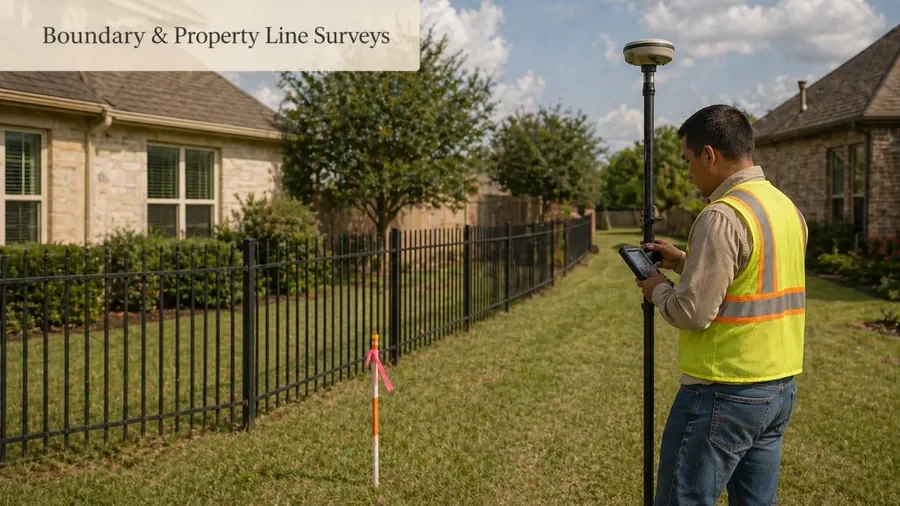
They are closely related, but the wording is different. A boundary survey is the formal service that identifies or documents property boundaries based on records, measurements, and professional survey work. A property line survey is the phrase homeowners often use when they want to know where their lot lines are for a fence, improvement, purchase, or property concern.
Comparison
Boundary Survey vs Property Line Survey
Boundary Survey
formal surveying term; used for property boundaries, corners, encroachments, legal descriptions, and documentation
Property Line Survey
common homeowner wording; usually used for fences, lot lines, neighbor questions, and buying/selling situations. In many quote conversations, a property-line request may be routed as a boundary survey help request.
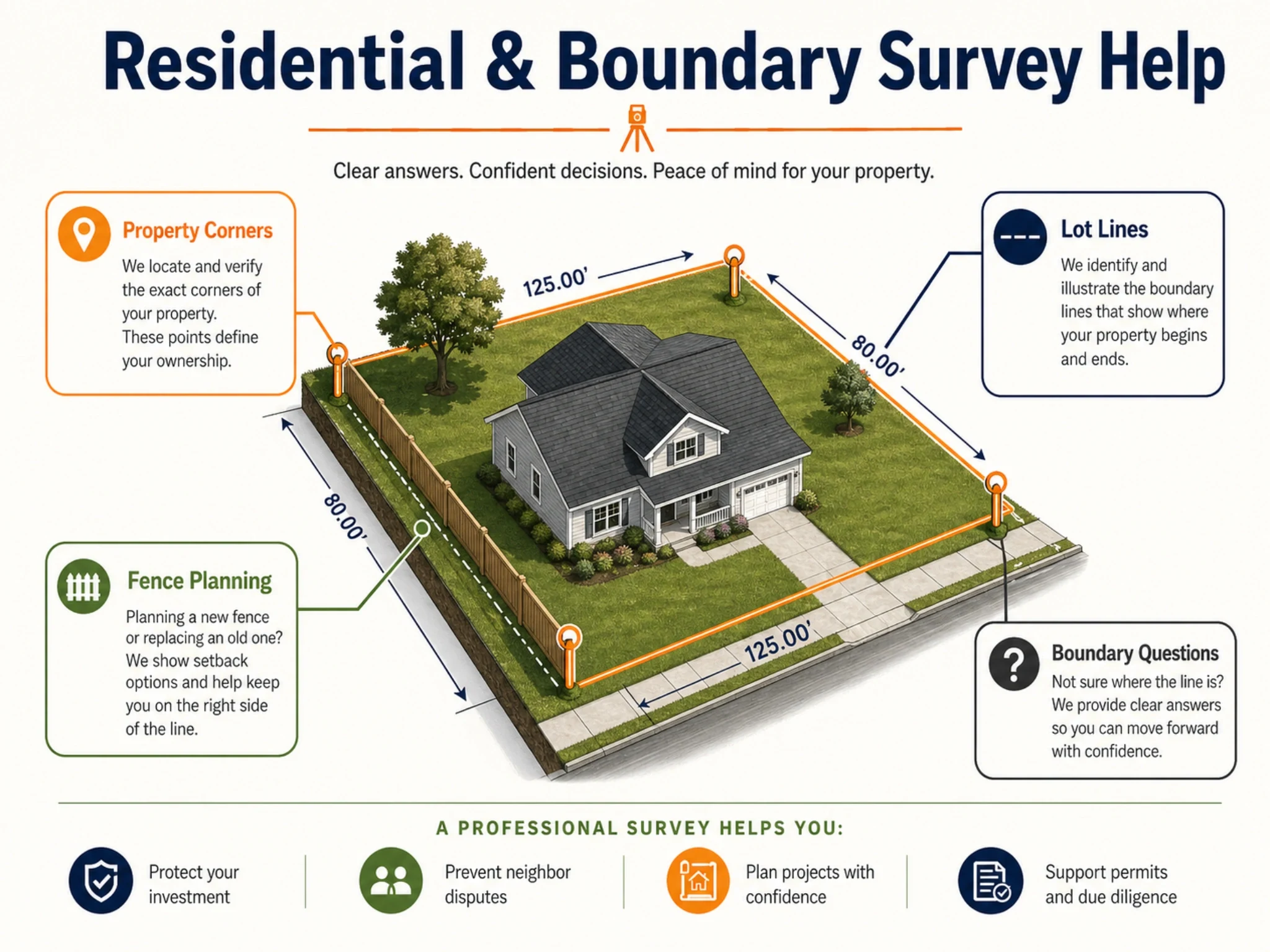
What Is a Boundary Survey?
A boundary survey is used to help identify the boundary limits of a property. The survey provider may review property records, previous plats or deeds, visible improvements, field measurements, and other relevant information to prepare the survey scope. Depending on the project, a boundary survey may help show property corners, lot lines, easements, encroachments, or improvements in relation to the property boundary.
A boundary survey may help with:
- Fence planning
- property-line questions
- lot corner location
- encroachment concerns
- buying or selling property
- home additions or exterior improvements
- title or closing requests
- neighbor boundary concerns
What Do People Mean by a Property Line Survey?
A property line survey is a common way homeowners describe the need to understand where property lines are located. In many cases, a Houston property owner searching for a property line survey is trying to solve a specific question: Can I build this fence here? Is this structure too close to the line? Where does my lot end? Do I need a survey before buying or improving this property?
Common property-line questions
Where is my property line? Do I need a survey before building a fence? Are my neighbor's improvements crossing the line? Can a contractor rely on an old survey? Do I need a new survey for a closing or refinance?
When Would You Ask for a Boundary or Property Line Survey?
You may ask for this type of survey when your project depends on knowing boundary location, lot lines, property corners, or the relationship between improvements and the property line. The right wording matters less than the reason for the survey. When requesting survey help, explain the situation clearly so the provider can route your details to the correct survey type.
Fence or gate project
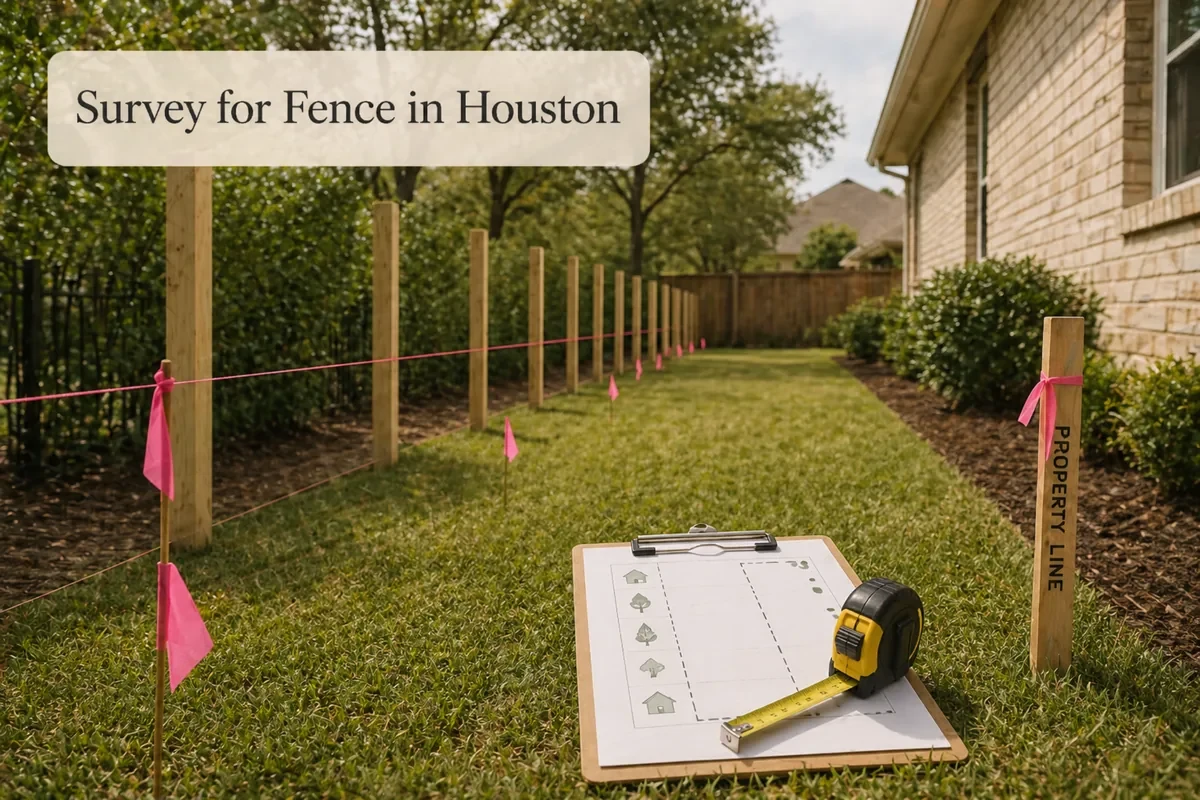
Before installing, replacing, or moving a fence, a property owner may want survey help to understand property-line location and avoid placing the fence in the wrong area.
Neighbor or encroachment concern
If a structure, fence, driveway, or improvement may be crossing a property line, a boundary-related survey can help document the property relationship before the owner decides next steps.
Buying, selling, or refinancing property
A buyer, seller, lender, or title company may request a current survey or survey-related document before closing or refinancing. The exact survey type depends on the requirement.
Home addition, pool, garage, or exterior improvement
If a planned improvement must fit within setbacks, building lines, or property boundaries, survey information may be needed before design, permitting, or construction decisions move forward.
Which Survey Page Should You Use Next?
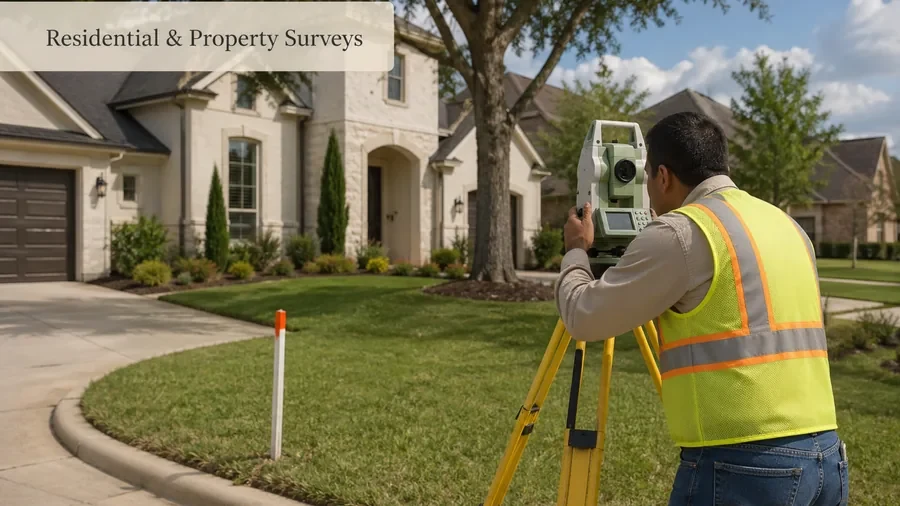
If your main question is where your boundary or lot line is, use the Boundary & Property Line Survey page. If your need is broader residential documentation for buying, selling, refinancing, or property records, use the Residential & Property Survey page. If your question is only about a fence project, the Fence Survey guide can help you decide when survey help makes sense.
How a Boundary or Property Line Survey Request Works
The process usually starts with the property address and the reason for the survey. A provider may review available records, confirm your requested scope, schedule field work if needed, and prepare the survey document or deliverable based on the agreed service.
1. Share the property details
Provide the Houston property address, reason for the survey, deadline, and any existing documents such as an old survey, deed, title commitment, or site plan.
2. Explain the exact problem
Tell the provider whether the need involves a fence, lot line, neighbor concern, purchase, refinance, home addition, or possible encroachment.
3. Confirm the survey scope
The provider can explain whether a boundary/property-line survey, residential survey, site plan, or another survey type is the better fit.
4. Review the quote and next steps
Pricing and scheduling depend on the property, records, requested deliverables, access, complexity, and urgency.
What Can Affect the Cost?
A boundary or property-line survey pricing can vary based on the property size, lot shape, record availability, field conditions, access, urgency, and the deliverables requested. A simple homeowner question may be different from a detailed boundary survey, encroachment review, or title-related survey need.
Common cost factors
Property size; lot complexity; record research; site access; existing improvements; requested markers or deliverables; urgency; whether additional title/deed review is needed.
Related Houston survey pages