Do You Need a Survey Before Building a Fence in Houston?
Not every fence project automatically requires a new land survey. However, a survey may be helpful when you are not sure where the property line is, the existing fence may not match the recorded boundary, a contractor asks for property-line information, you are replacing a shared fence, or there is a neighbor concern.For many fence projects, the relevant survey type is usually a boundary or property line survey, because the main question is where the lot line and property corners are located.
Why Property Lines Matter Before a Fence Project
A fence can affect daily use of the property, neighbor expectations, resale documents, and future improvements. Confirming property-line information before installation can help reduce confusion and make the project easier to explain to contractors or future buyers.
Avoid Building on the Wrong Side of the Line
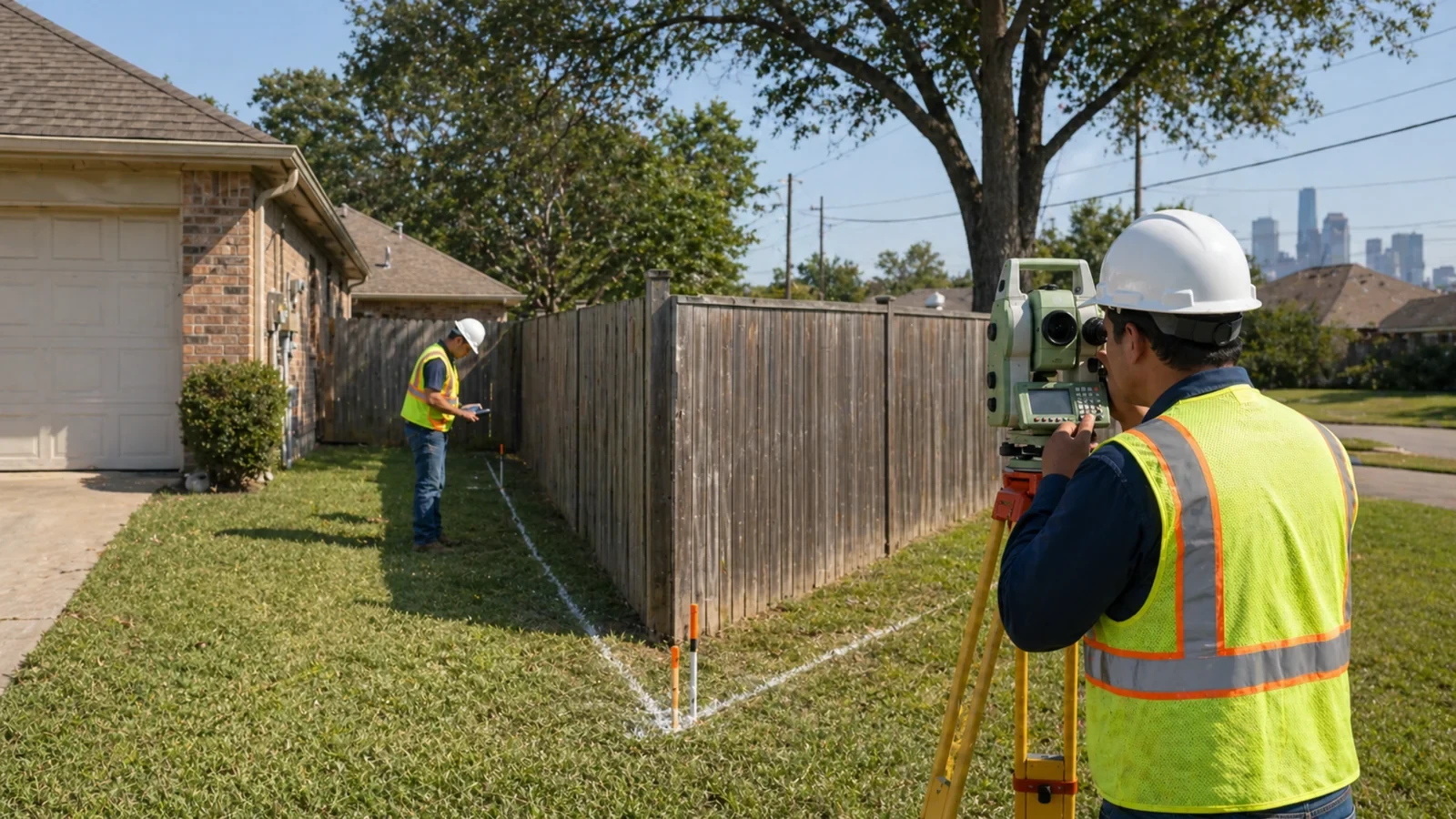
Old fences, landscaping, and informal markers are not always reliable proof of the true property boundary. A survey can help a provider review the property and clarify the line before a new fence is placed.
Confirm Lot Corners or Property Markers
Some fence projects need corner or boundary information before a contractor can plan the installation. The exact deliverables depend on the survey type, property conditions, and provider scope.
Handle Neighbor or Shared Fence Questions
If a fence sits on or near a shared line, a survey can help clarify the property information before conversations with neighbors, contractors, or property professionals.
Prepare for Contractor, HOA, or Permit Questions
A contractor, HOA, project reviewer, or permit-related process may ask for a site drawing, property information, or line clarity. A survey or existing property document may help determine the next step.
Houston Fence and Permit Context to Keep in Mind
Houston fence projects can involve different requirements depending on height, material, project location, and property conditions. The Houston Permitting Center notes that residential fences over 8 feet above grade require a permit, and masonry or concrete fences require a permit regardless of height.Because property-line and permit questions can overlap, it is smart to confirm what information your project needs before work starts.
Before You Install or Replace a Fence
Before scheduling a fence contractor, gather the documents and project details that can help a surveying provider or property professional understand your situation.
Look for an Existing Survey or Closing Document
If you recently bought the property, check your closing package, title documents, lender documents, or old property files for a survey or plat copy. An old survey may help explain past information, but it may not show current conditions or guarantee fence placement.
Do Not Rely Only on an Existing Fence
An existing fence can be useful context, but it may not match the true property line. If line accuracy matters, a boundary or property line survey is usually the better next step.
Ask What Your Contractor Needs
Some contractors may ask for marked corners, a current survey, or a site drawing before installing a fence. Ask what they need before requesting pricing so the survey scope is clearer.
Fence Survey vs Boundary Survey vs Residential Property Survey
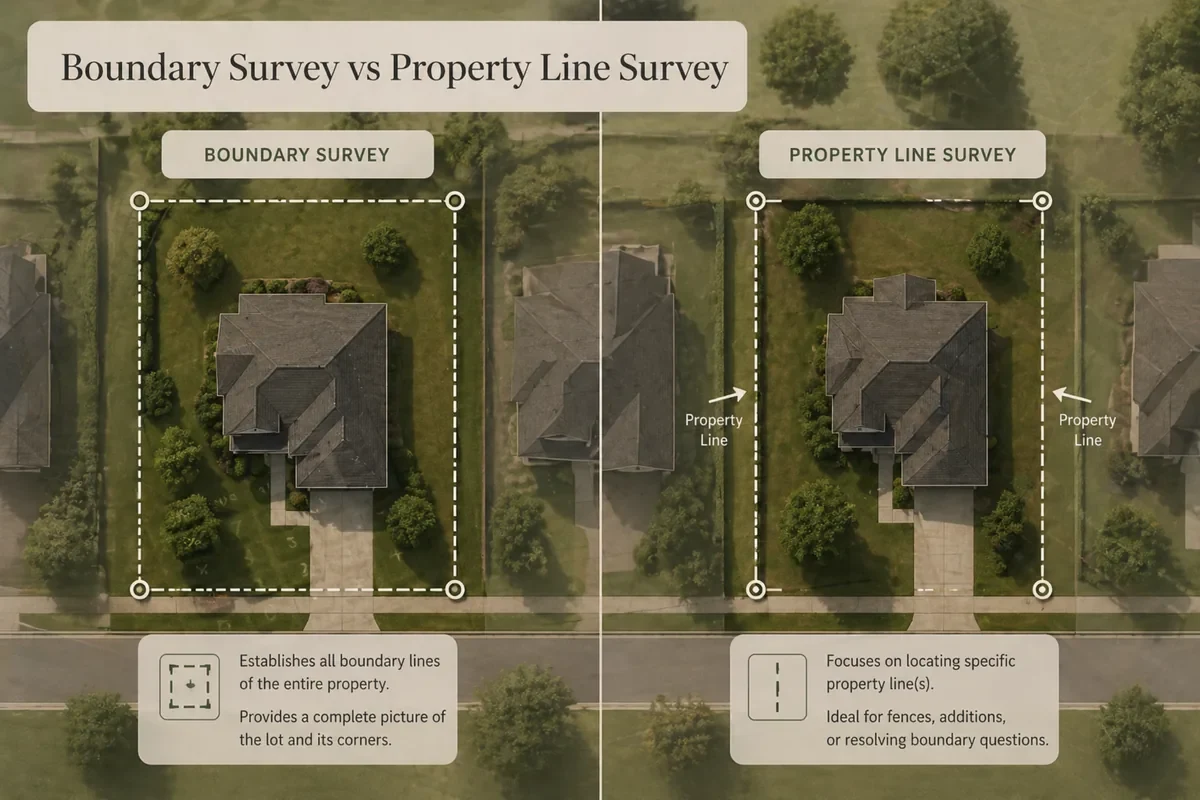
Fence-related searches often use different words for the same problem. If your main question is “where can the fence go?” the answer often connects to boundary or property-line information. If your broader need is a home purchase, refinance, or general property document, a residential property survey may be more relevant.
Survey for Fence
A support topic for homeowners planning a fence. It explains what to consider before installation and when to request property-line help.
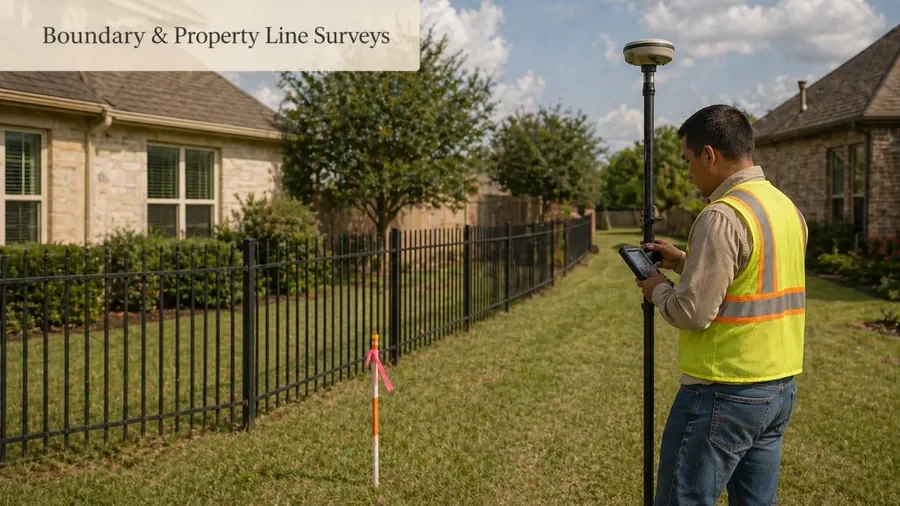
Boundary & Property Line Survey
Best fit when the main issue is lot lines, fence placement, encroachment, neighbor concerns, or property corners.
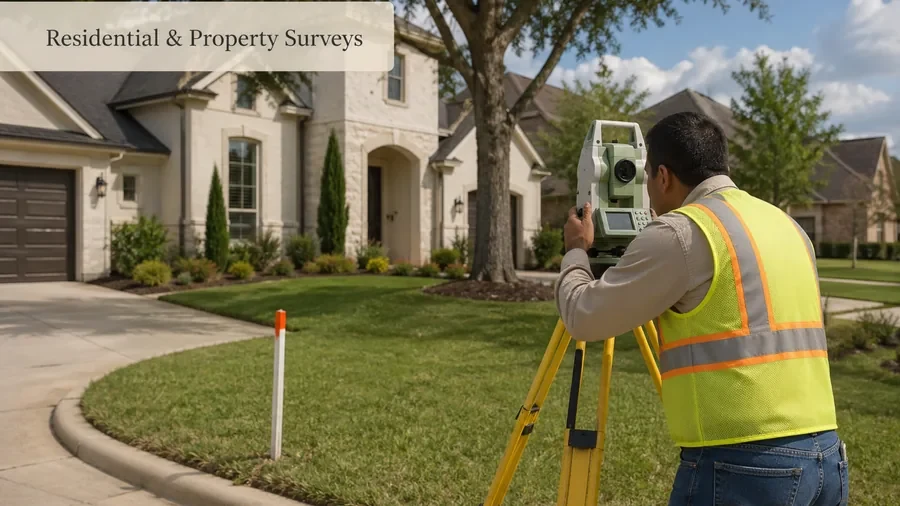
Residential & Property Survey
Best fit when the need is a broader residential property survey for a home, lot, refinance, closing, or general property document.
How the Fence Survey Help Process Works
Start by sharing the property address, fence project type, and what question you are trying to answer. A Houston surveying provider can review whether your situation is mainly a boundary/property-line issue, a residential property survey need, or a site-plan/document question.
- 1Step
1. Share the Property Address
The address helps the provider understand the property location and begin reviewing what information may be needed.
- 2Step
2. Explain the Fence Project
Say whether you are building new, replacing an old fence, moving a fence, or dealing with a neighbor/property-line concern.
- 3Step
3. Provide Any Existing Survey or Documents
Old surveys, plats, closing documents, HOA notes, contractor requests, or permit-related documents can help clarify the quote.
- 4Step
4. Get Routed to the Right Survey Help
If the main issue is property lines or corners, the next step may be a boundary or property line survey pricing. If the issue is broader, another residential survey may fit better.
What Can Affect Survey Cost for a Fence Project?
Fence-related survey cost can vary because each property and scope is different. A simple document question is different from boundary research, corner work, complex records, access issues, or an urgent contractor deadline.
Property Size and Lot Complexity
Larger or irregular lots can require more research and field work than simple small residential lots.
Existing Records and Old Surveys
Clear existing records may help a provider understand the situation faster, while missing or conflicting documents may require more review.
Urgency and Contractor Timeline
If a fence contractor is waiting to start, timing can affect scheduling and quote expectations.
Related Houston survey pages